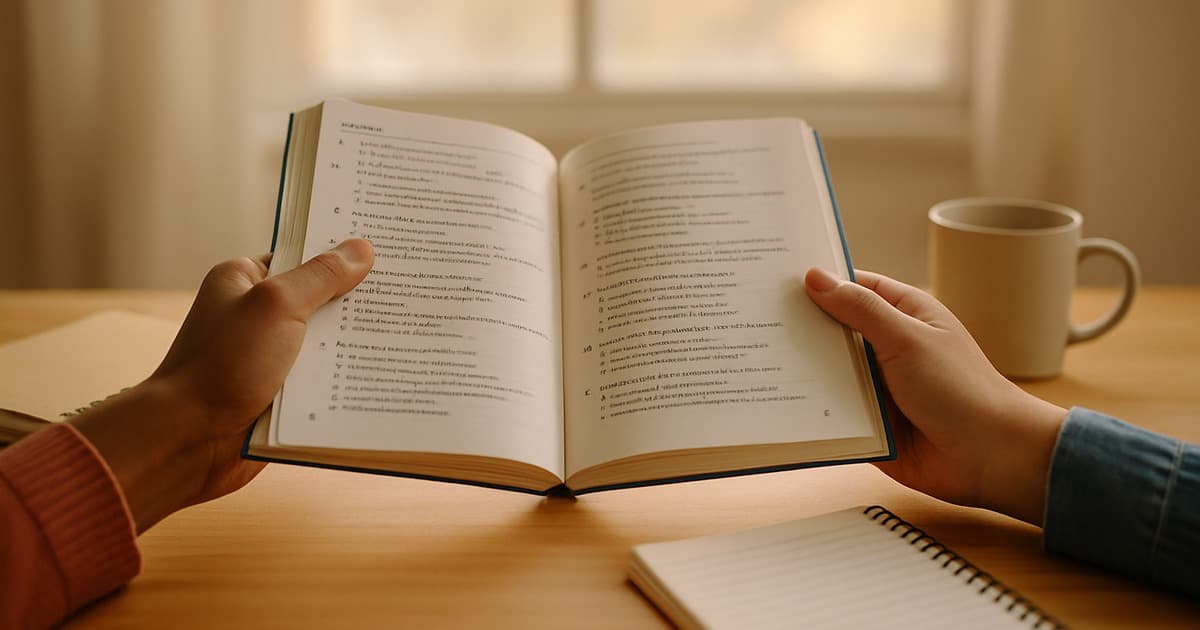

The “Picture and Translate” Revolution on Your Phone
Five years ago, the idea of pointing your phone at a sign in a language you have never studied and instantly reading what it says would have seemed like science fiction. Today, the picture and translate workflow is a standard expectation — built into cameras, baked into search engines, and refined into standalone apps that do it better than anyone. This article is your complete guide to using it for three of the most practical scenarios in modern life: shopping abroad, studying foreign-language textbooks, and exploring museum exhibits.
Try Free — Owll TranslatorQuick Answer
The picture-and-translate process takes under five seconds on a modern smartphone: open your translation app, point the camera at any text, take a picture (or use live view), and receive an instant translation. Owll Translator enhances this by reading the translation aloud in a natural AI voice, so you can look up from your phone and stay engaged with the world around you — rather than squinting at a small screen.
How Your Phone Does It: The Technology Behind Picture and Translate
Modern smartphones combine three hardware and software capabilities to make picture-and-translate possible in real-time:
1. High-Resolution Camera Sensors
Today’s flagship cameras — and even mid-range phones — capture enough detail to resolve small text on signs, labels, and pages. The shift from 12MP to 50MP+ sensors means that text that once appeared blurry in photos is now crisply readable, even when zoomed in.
2. On-Device AI Processing
Neural processing units (NPUs) built into modern mobile chips allow image recognition algorithms to run locally on the device, reducing latency to near-zero for the OCR step. The character detection stage no longer requires a round trip to a server — it happens on your phone in milliseconds.
3. Cloud-Powered Neural Translation
While OCR can run on-device, the translation step benefits from large cloud-based neural models that are continuously updated with new languages, dialects, and vocabulary. The combination — fast local OCR plus powerful cloud NMT — is what makes picture-and-translate feel instantaneous even when the translation model is enormous.
Use Case 1 — Shopping Abroad
International shopping is one of the most immediately satisfying applications of picture-and-translate technology. Whether you are browsing a night market in Bangkok, a department store in Tokyo, or a farmacia in Rome, the ability to understand what a product is — its ingredients, size, usage, expiry date — without speaking the local language transforms the experience.
Practical scenarios include:
- Reading size labels on clothing (sizes vary significantly by country and label convention)
- Checking ingredients on packaged food for allergens
- Understanding return and exchange policy notices posted at the till
- Reading price tags that include VAT breakdowns or discount conditions in local language
- Decoding promotional signs and special offer conditions
With Owll Translator, you can take a picture of a sign and hear the translation spoken in your ear within seconds — keeping your eyes on the shop floor rather than on your screen. This is the kind of seamless experience that makes international shopping enjoyable rather than stressful.
Use Case 2 — Reading Foreign-Language Textbooks
Students and academics who work with sources in multiple languages face a daily challenge: textbooks, journal articles, and reference materials published in languages they read slowly or not at all. Picture-and-translate is a valuable accelerator in this context. Rather than painstakingly typing out passages to run through a translation tool, students can photograph paragraphs or pages and receive immediate translated text they can study and annotate.
This use case is particularly strong for:
- Science and medicine students accessing foundational texts originally published in German or French
- History and philosophy students working with primary sources in Latin, Ancient Greek, or Classical Chinese
- Language learners who want to read a foreign-language novel and check their comprehension paragraph by paragraph
- Researchers citing international sources without full fluency in the source language
For this use case, accuracy matters more than speed. Check our guide on the best image translator apps of 2026 to compare how different tools handle academic and technical vocabulary.
Use Case 3 — Museum Exhibits and Cultural Sites
Museums around the world are increasingly international destinations, but exhibit labels, audio guide scripts, and explanatory placards are almost always in the local language (with perhaps an abbreviated English summary at best). Picture-and-translate lets you read the full original text on every artifact, panel, and information board — turning a superficial visit into a genuinely deep cultural experience.
Think about what becomes possible:
- Reading the original inscription on an ancient artefact in the same language it was written
- Translating the artist’s statement next to a painting in a foreign gallery
- Understanding historical context panels in their full original detail, not just the brief English summary
- Following a walking tour map with annotations written in the local language
In this setting, Owll Translator‘s voice read-out is particularly useful: rather than holding your phone up to read translated text on screen while also trying to look at the exhibit, you can take a quick photo and then listen to the translation through an earpiece as you continue to observe the artwork or artefact naturally.
Picture and Translate App Comparison
| Scenario | Owll Translator | Google Lens | Google Translate | Microsoft Translator |
|---|---|---|---|---|
| Shopping — product labels & signs | ⭐⭐⭐⭐⭐ | ⭐⭐⭐⭐ | ⭐⭐⭐⭐ | ⭐⭐⭐ |
| Academic text / dense paragraphs | ⭐⭐⭐⭐⭐ | ⭐⭐⭐ | ⭐⭐⭐⭐ | ⭐⭐⭐⭐ |
| Museum plaques / exhibit descriptions | ⭐⭐⭐⭐⭐ | ⭐⭐⭐⭐ | ⭐⭐⭐ | ⭐⭐⭐ |
| Voice read-out of result | ✅ Natural AI voice | ❌ | Basic TTS | Basic TTS |
| 100+ languages | ✅ | ✅ | ✅ | ✅ |
| Scene-optimised AI context | ✅ | Partial | ❌ | ❌ |
Getting the Most From Your Picture-and-Translate Experience
- Use live view for speed: When you need an instant answer — reading a shop sign as you walk past — use the live camera mode. When you want to study the translation carefully (textbooks, museum panels), photograph and zoom in.
- Combine with earphones: In noisy shopping environments or quiet museum galleries, listening to the translation through earphones keeps the experience hands-free and socially unobtrusive.
- Save translated images: Some apps let you save a picture with the translated overlay embedded. This is useful for building a visual vocabulary or documenting foreign menus you want to revisit.
- Use the history feature: Good translation apps log your recent translations. If you photographed and translated a product at a shop and want to find it again later, your translation history will have the record.
Where Owll Translator Fits Into This Picture
Most picture-and-translate tools excel at the reading use case. Owll Translator is designed for the moment after the reading — when you want to act on what the picture told you. Ask a shop assistant a follow-up question. Tell a museum guide you have a query about the exhibit. Order the dish you just translated on the menu. All of this is possible immediately after your picture-and-translate action, using the same app, in real-time voice mode across 100+ languages.
To understand how this voice capability works alongside image translation, read our detailed article on instant picture translation and language reading.
Frequently Asked Questions
How fast is picture-and-translate on a modern smartphone?
End-to-end picture-and-translate — from shutter press to translated text on screen — typically takes 2–5 seconds on a modern smartphone with a stable internet connection. On-device OCR runs in under a second; the remaining time is network latency for the translation API call. In live camera mode, translation overlay updates continuously with virtually no perceptible delay.
Does picture-and-translate work on printed books and textbooks?
Yes — printed text in books is among the easiest content for OCR to process accurately, given its consistent font, size, and contrast. Most apps handle textbooks well. Point your camera at the paragraph you want, take a clear photo in good light, and you will receive an accurate translation within seconds. For very small footnote text, zoom in and take a separate close-up photo.
Can I use picture and translate in a museum without disturbing others?
Absolutely. Using your phone camera silently and listening through earphones is no more intrusive than using a standard audio guide. Check museum photography policies first — some exhibitions restrict flash photography — but standard silent camera use for personal translation is generally permitted. Owll Translator’s voice mode can be set to play through earphones only, making it completely unobtrusive in quiet gallery settings.
What happens if the text in my picture is partially obscured or at an angle?
Modern AI can correct for moderate angles and partial occlusion. If only part of a sign is visible, the app will translate what it can detect. For best results, photograph text straight-on where possible, or use multiple overlapping shots to cover the full text if one angle gives poor coverage. Check the Owll Translator plans for features like batch image processing if you regularly handle large volumes of images.
Try Free — Owll Translator